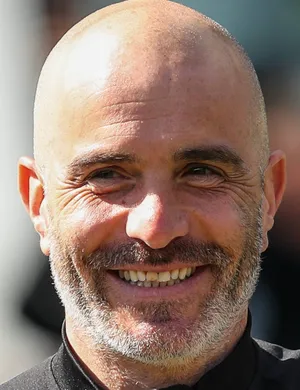
Chelsea were broadly satisfied with Enzo Maresca at the conclusion of last season after he secured Champions League qualification — an outcome regarded internally as the club’s primary objective. That success, combined with triumphs in the UEFA Conference League and the Club World Cup, initially strengthened his standing at Stamford Bridge.
While winning Europe’s third-tier competition was largely anticipated, Chelsea’s victory over Paris Saint-Germain to claim the Club World Cup title exceeded expectations and was warmly received by the club’s hierarchy. Maresca’s work earned him praise from senior figures, including sporting directors Paul Winstanley and Laurence Stewart, as well as influential co-owner Behdad Eghbali.
When Maresca arrived from Leicester City in 2024 — in a deal worth £10 million — he agreed to operate within a clearly defined structure. His focus would be coaching and match preparation, while recruitment, medical operations and broader backroom management would be handled by the club’s leadership.
That structure has remained intact, particularly Chelsea’s long-term recruitment strategy of targeting elite young talent from emerging leagues, resulting in the youngest squad in the Premier League.
Sources close to the situation stress that Maresca’s frustrations were not rooted in the quality of players or the club’s overall vision. Instead, tensions emerged over how his work with such a young group was perceived and evaluated.
Although encouraged to rotate his squad, Maresca reportedly felt that changes in the Premier League often led to dropped points, exposing him to criticism. He became increasingly defensive of his performance, believing he was delivering strong results under difficult circumstances and that the club did not sufficiently shield him from external scrutiny.
He also publicly expressed disagreements with certain decisions, including the club’s choice not to sign a central defender following Levi Colwill’s serious knee injury during pre-season. Club executives argued that such a move could jeopardise the development and future of academy prospect Josh Acheampong, a stance Maresca ultimately accepted.
Away from the pitch, relations were further strained by Maresca’s desire to pursue personal projects. He was blocked from publishing a book and later spoke at Italy’s Il Festival dello Sport without club authorisation, moves that reportedly unsettled senior management.
Maresca has since changed representation, moving from the Wasserman agency to Jorge Mendes, and has been linked with high-profile roles elsewhere, including speculation about a future at Manchester City — claims he has publicly dismissed.
Even symbolic details reflected growing distance, with Maresca increasingly opting out of wearing official club apparel in favour of his own clothing.
Collectively, these issues contributed to a breakdown in trust, leaving both parties questioning the long-term viability of the relationship and ultimately paving the way for his departure.