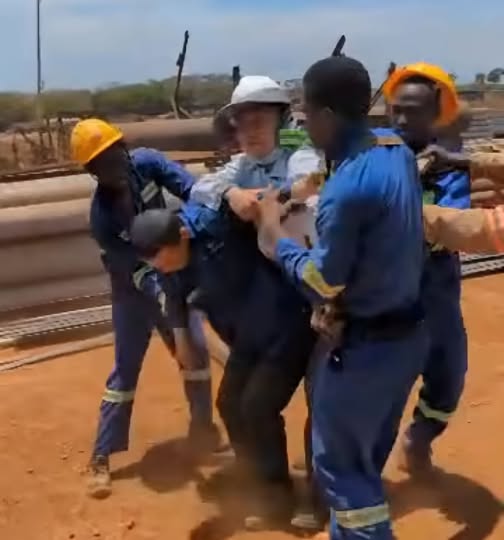
Labour conflicts between Chinese employers and African workers frequently arise in infrastructure and mining ventures throughout Africa. In Zimbabwe, these tensions have occasionally escalated from workplace disagreements into deadly confrontations.
Chinese investment plays a crucial role in Zimbabwe’s mining and construction industries, especially in gold, chrome, and lithium extraction. While many operations proceed smoothly, issues such as insufficient regulatory oversight, cultural misunderstandings, and unresolved worker grievances have sparked violent clashes, highlighting deeper imbalances of power.
This dynamic has been most evident in the regions of Mutoko and Gokwe.
In Mutoko, a Zimbabwean man was shot dead at a mine run by Chinese operators, sparking public outrage and prompting a police inquiry. Conflicting narratives ranging from claims of self-defense by the operators to accusations of mistreatment by the local community have intensified perceptions that workers and residents have little protection when disputes arise at foreign-managed sites.
Previously, in Gokwe, a Chinese mine owner was found guilty and given a lengthy prison sentence for the fatal shooting of a young miner amid a workplace conflict. This verdict was widely seen as a rare demonstration of justice, yet it also revealed how long tensions had been allowed to escalate before legal action was taken.
Though such violent episodes are not common, their consequences are significant. They illustrate what can happen when disputes over wages, safety, and job security collide with weak enforcement of regulations and the presence of armed authority figures.
Zimbabwe’s growing lithium industry has exacerbated these frustrations. Local employees are mostly limited to low-skilled positions, while promises of training and increased local participation have lagged behind production goals. Each violent incident becomes a stark reminder of an extractive system that prioritizes mineral output over workers’ dignity.
For the Zimbabwean government, the challenge is complicated , Chinese investment is essential for development, yet inconsistent application of labour and safety laws damages public confidence. The conviction in Gokwe demonstrated that accountability is achievable, but the tragedy in Mutoko underscored how fragile this progress remains.
The key takeaway for 2025 is clear , development efforts that overlook labour rights not only foster resentment but also risk turning workplaces into sites of conflict and violence.
END//.,.