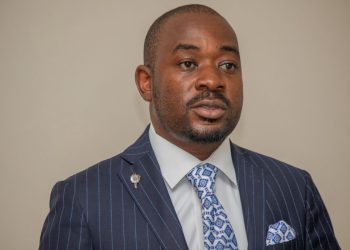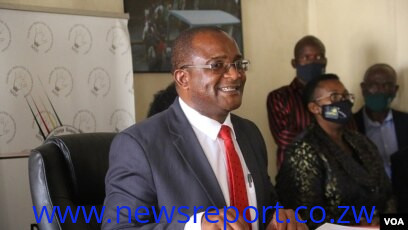
Harare, Zimbabwe – Opposition leader Douglas Mwonzora has warned that Zimbabwe is facing serious social, economic and political challenges, saying the country is “at a crossroads” and requires urgent reforms to address worsening living conditions.
Speaking at a press briefing, Mwonzora outlined a number of problems affecting ordinary Zimbabweans, including widespread poverty, unemployment and declining public services.
According to Mwonzora, the country’s health sector is struggling, with major referral hospitals such as Parirenyatwa Hospital, Mpilo Central Hospital and United Bulawayo Hospitals experiencing poor service delivery. He said many citizens are failing to access adequate healthcare due to shortages of resources and staff.
Mwonzora also highlighted challenges in the education sector, claiming that more than half a million students have been unable to attend school because their families cannot afford school fees. He added that there is limited support for students pursuing tertiary education.
The opposition leader further criticized growing inequality in Zimbabwe, saying citizens face unequal access to education, employment opportunities and quality health services.
He also condemned what he described as the harassment of informal traders by local authorities and the Zimbabwe Republic Police. Vendors in several cities, he said, are regularly removed from their trading spaces despite relying on street trading for survival.
Mwonzora said workers in Zimbabwe continue to face poor conditions of service, with many earning wages below the poverty line. He noted that about 80 percent of the country’s workforce operates in the informal sector, leaving many without strong labor protections.
Youth unemployment was also raised as a major concern. Mwonzora claimed that more than a third of young people are unemployed, a situation he said has contributed to rising cases of drug abuse.
The politician also called for justice for victims of past political violence, including those affected by the Gukurahundi and the 2008 Zimbabwe election violence. He said many victims have yet to receive justice or compensation.
Mwonzora also accused the ruling party, ZANU-PF, of restricting political space by allegedly preventing opposition parties and civil society organizations from holding meetings while continuing its own campaigns.
He expressed concern about proposed constitutional changes, arguing that certain amendments could weaken democratic principles and reduce citizens’ participation in choosing their leaders.
Mwonzora urged authorities to focus on solving the country’s economic and social challenges instead of pursuing political reforms that he believes may concentrate power.
“The people of Zimbabwe fought for democratic rights, including the principle of one person, one vote,” Mwonzora said, adding that any reforms should strengthen rather than weaken those gains.
He concluded by calling on government institutions to prioritize the welfare of citizens and protect the country’s democratic values.